
EASA certifies faster in-flight connectivity for Airbus ACJs with Gogo Galileo FDX

ACJ customers are one step closer to ultra-fast in-flight connectivity now that EASA has *STC certified Airbus’ ACJ320/320neo aircraft with the latest generation high-speed Gogo Galileo “Full-Duplex” (FDX) integrated solution. Certified on May 11th, the FDX installation includes a new electronically steerable flat antenna (ESA). This ESA is a core part of Airbus’ “ACJ Connect” connectivity platform, which was developed with Gogo and utilises Eutelsat OneWeb’s Low Earth Orbit (LEO) constellation, and was first announced in February 2025.
The FDX certification milestone builds on Airbus’ introduction last year of Gogo Galileo’s “Half Duplex” (HDX) solution on the ACJ319 Family. While HDX offers up to 60 Mbps download and 11 Mbps upload capability, Gogo’s FDX option for the larger ACJ320 offers up to 195 Mbps download and 32 Mbps upload.
ACJs equipped with either the FDX or HDX systems will be harnessed into Eutelsat OneWeb’s Low Earth Orbit (LEO) constellation of more than 640 satellites. The LEO-based network satellites orbit much closer to the earth, offering higher speed and lower latency, combined with global coverage, even at the poles.
Chadi Saade, President of Airbus Corporate Jets said:
“We are delighted to be among the first corporate aircraft manufacturers to offer and support a certified, fully integrated LEO in-flight connectivity solution, leveraging our partners’ respective technologies and satellite infrastructure – including Gogo Galileo’s state-of-the-art FDX antenna and Eutelsat’s OneWeb satellite constellation.”
He adds: “Achieving this certification for Gogo’s FDX offers our ACJ Connect customers a new low-latency high-bandwidth choice and consolidates the ACJ320 Family’s position as offering industry leading-business aviation connectivity.”
Michael Skov Christensen, Gogo Chief Commercial Officer said:
“The addition of the Gogo Galileo FDX gives ACJ’s customers the certainty of reliable, high-speed connectivity throughout all phases of flight, wherever they are flying. In addition, Gogo is proud of its commitment to data privacy and cybersecurity. We only use customer data for operations and never for any other purpose, including the development of other products or artificial intelligence – something to reassure ACJ’s customers.”
How is FDX different from HDX introduced on ACJ319s last year?
Compared with the HDX solution, FDX features a larger full-duplex ESA antenna with two arrays: one for data transmission and one for receiving, enabling even higher-speed, low-latency connectivity for the cabin. Meanwhile, the HDX option comprises a single electronically steered array that constantly and seamlessly switches between transmit and receive modes, enabling the transfer of data to and from a satellite.
While the Gogo Galileo HDX is designed to enable six or more passengers to simultaneously video call, live stream, use data-hungry apps, email and use corporate networks, the FDX architecture effectively widens the data pipe into the aircraft to serve even more passengers using data heavy applications all at once. By allowing data to be transmitted and received simultaneously, more data-intensive applications can be optimised for more passengers.
Offering a new choice for governments, CEOs and VIP fleet operators
For governments and heads of state in particular, this robust integrated connectivity solution – ACJ Connect – ensures they remain connected to national defense and diplomatic channels with zero compromise on security and reliability. For corporate CEOs the high-speed, low-latency video conferencing and data access allows for real-time business decisions, transforming flight time into productive office time. While for fleet managers and operators the "plug-and-play" support within the ACJ Service Centre Network, ensures minimal downtime and guaranteed technical support.
“The first ACJ320 Family aircraft are now starting to be equipped with the ACJ Connect FDX system during cabin outfitting by our network of service centres and will enter service in the near future,” says Paul Achkar, ACJ Services Business Development Director. “Airbus is responsible for supplying the full solution comprising the STC, the FDX antenna and the kits.”
He adds: “As a next step, Airbus is working towards FDX certification for the ACJ318, ACJ319 and the widebody ACJ330 aircraft to be received in the course of 2026.”
*Note: STC = Supplemental Type Certificate.
Ressources
FDX Antenna
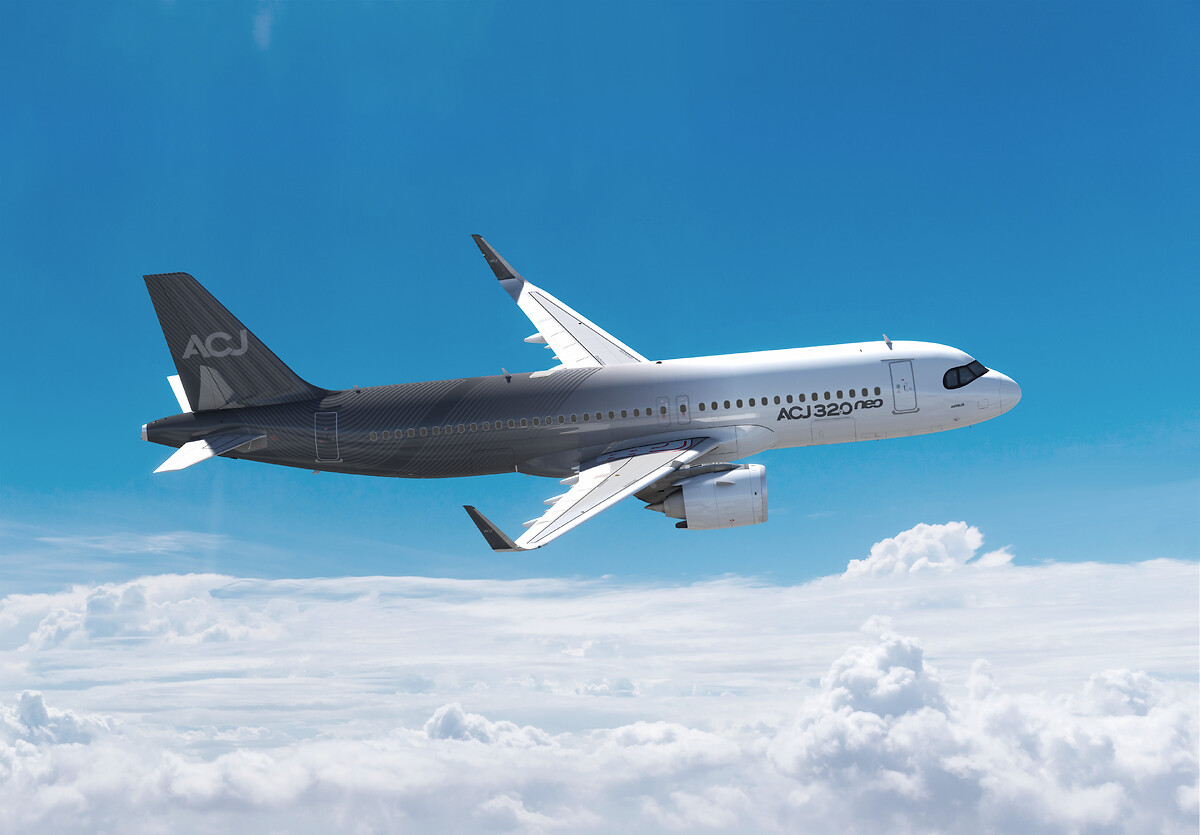
ACJ320neo with FDX antenna
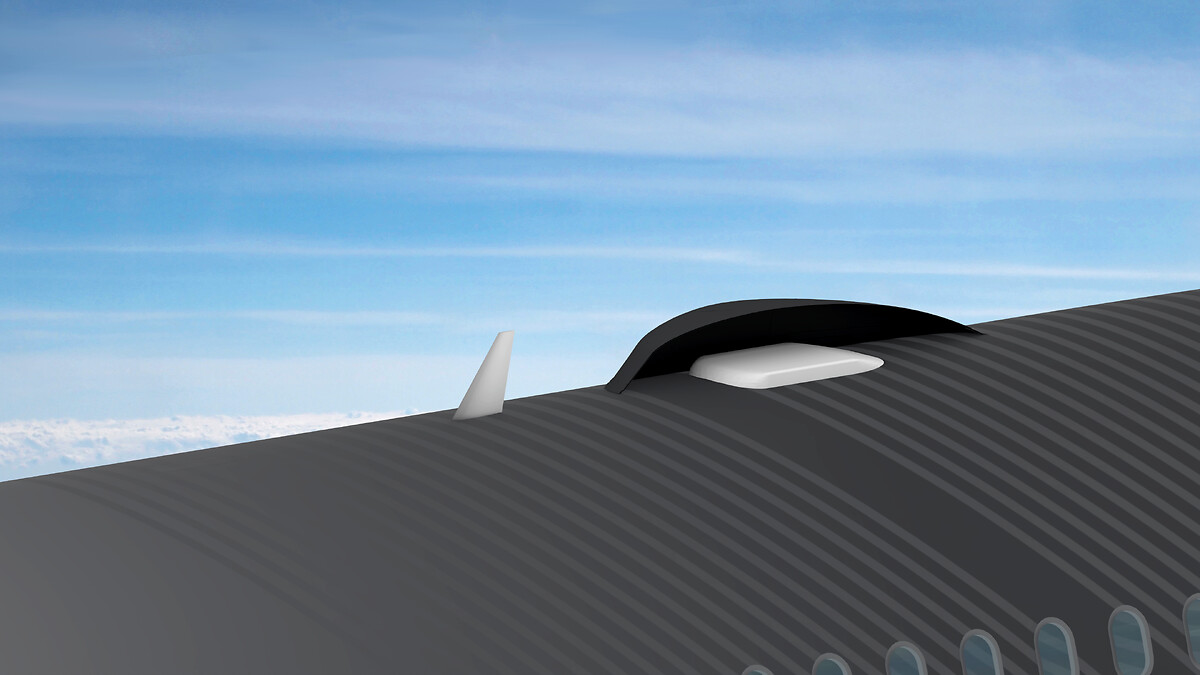
ACJ320neo FDX Antenna close up
FDX Antenna
ACJ320neo with FDX antenna
ACJ320neo FDX Antenna close up
Related pages
-

Airbus expands its ACJ Connect Link solution with Gogo as connectivity provider
Airbus has signed an MoU agreement with Gogo Business Aviation to further develop ACJ Connect Link for ACJ customers.
-
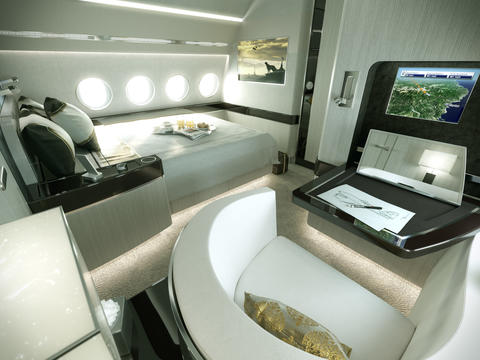
ACJ cockpit and cabin connectivity
Airbus solutions provide the best combination of safety and cabin connectivity. New technologies enhance communication on-board,…

